
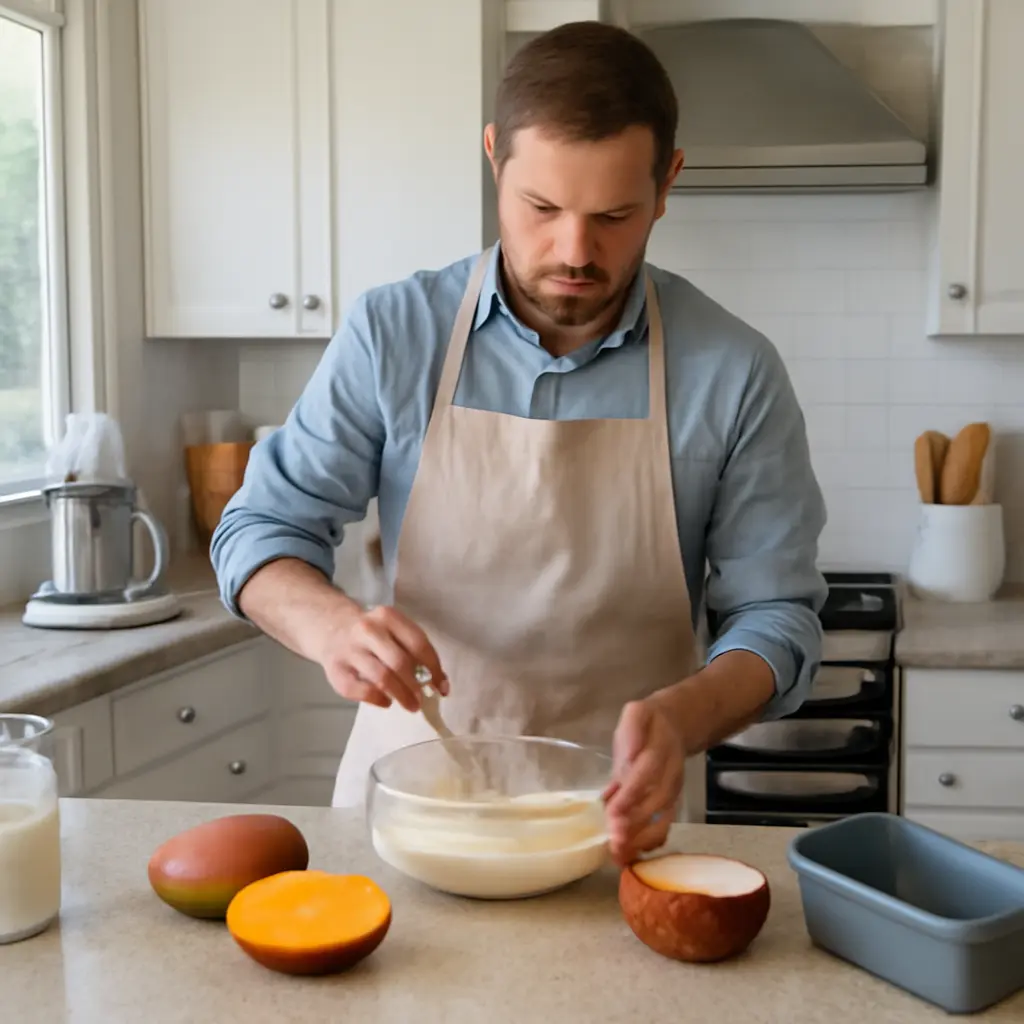
Tropical gelato flavor innovation in home kitchens is the development of fruit-forward, culturally informed frozen desserts using accessible equipment and ingredients. It is heading toward brighter acidity, layered tropical flavors, plant-based options, and techniques that help home cooks manage texture without professional batch freezers. The opportunity is sizable: the International Dairy Foods Association reports that U.S. ice cream and frozen dessert sales reached $11.4 billion in 2023, while the U.S. Department of Agriculture continues to document the importance of mango, pineapple, coconut, and other tropical crops in global food systems. In practice, the next wave is less about simply adding exotic fruit and more about balancing water, sugar, fat, aroma, and texture.
Tropical Gelato Flavor Innovation Begins with Ingredient Balance
Gelato is an Italian-style frozen dessert typically distinguished from conventional ice cream by a denser texture, relatively lower overrun—the air incorporated during churning—and a serving temperature that allows its flavors to register clearly. The Carpigiani Gelato University describes gelato as a product whose sensory qualities depend on the balance of ingredients, processing, and temperature. “Tropical gelato flavor innovation” refers to applying that balance to fruits and flavor traditions associated with tropical regions, while adapting recipes to home equipment.
The category includes fruit sorbetto, dairy gelato flavored with tropical fruit, coconut-based frozen desserts, and combinations that bring fruit together with herbs, spices, nuts, or fermented ingredients. A useful bridge between inspiration and successful recipe development is understanding the behavior of the ingredients: tropical fruit can contribute vivid aroma and acidity, but its water and sugar content also affect scoopability.
Fruit-forward gelato and sorbetto
Fruit-forward gelato uses purée, juice, or concentrated fruit alongside a dairy base; sorbetto generally relies on fruit, water, and sweetener rather than dairy. Mango, passion fruit, guava, pineapple, papaya, and banana are promising choices because they offer distinct aromas and a range of sweetness and acidity. The International Tropical Fruits Network identifies mango, pineapple, and papaya among major tropical fruit crops, reflecting their established importance in both growing regions and international markets.
For home cooks, fruit maturity matters as much as variety. Ripe mango or banana can provide body and sweetness, while tart passion fruit or lime can sharpen a rich coconut or dairy base. A practical approach is to taste the fruit before sweetening, then adjust the recipe gradually. Because water freezes into hard crystals, a very watery purée may need concentration, a higher solids content, or a complementary ingredient such as coconut cream.
Coconut, dairy, and plant-based bases
The base determines how tropical flavors are carried. Milk and cream contribute fat and milk solids; coconut milk and coconut cream provide plant-based fat and a recognizable aroma. Oat, soy, and other plant beverages can also be used, but their protein, fat, and solids vary, so they do not behave identically to dairy. The U.S. Food and Drug Administration distinguishes plant-based alternatives from standardized dairy products, making it important for cooks to treat substitutions as recipe changes rather than one-for-one guarantees.
A coconut-mango gelato, for example, can combine full-fat coconut milk with mango purée and a measured amount of sugar. A lighter coconut drink may produce a thinner, icier result unless the recipe adds structure through fruit solids or another suitable stabilizing ingredient. The key innovation is not simply removing dairy; it is designing a base that supports the fruit’s aroma and freezes smoothly.
Home Gelato Techniques Are Expanding Flavor Possibilities
Home equipment has widened access to frozen-dessert experimentation, but the same physical principles apply whether a batch is made in a countertop machine or a commercial freezer. The American Chemical Society explains that ice cream texture is shaped by ice crystals, air cells, fat, and stabilizing components. For tropical recipes, controlling excess water and freezing promptly are especially important. These process choices connect directly to the flavor combinations home cooks can explore: a stable base makes delicate aromatics and tart fruit easier to perceive.
Balancing sweetness, acidity, and freezing point
Sugar contributes sweetness, but it also lowers the freezing point and helps keep a frozen dessert softer. Too little can leave a batch hard and icy; too much can make it overly soft and mask fruit character. Acidity from passion fruit, calamansi, tamarind, or lime can brighten rich flavors, but adding acid to dairy may cause curdling, so it is often safer to incorporate acidic fruit after cooking and cooling the base or to use a non-dairy formulation.
A useful development method is to make small test batches and record fruit weight, sweetener, and tasting adjustments. This is more reliable than assuming all mangoes or pineapples have the same sweetness. The USDA FoodData Central database provides nutrient information for many fruits and ingredients, although actual ripeness and cultivar still influence a recipe’s final taste.
Infusions, inclusions, and layered flavor
Layered flavor means combining a dominant fruit with supporting aromas or textures. Lime zest, ginger, lemongrass, toasted coconut, cardamom, chile, and fresh herbs can add contrast without overwhelming the fruit. Inclusions such as candied pineapple, cacao nibs, toasted nuts, or a passion-fruit ripple create texture and pockets of concentrated flavor.
The strongest combinations are usually built around a clear lead flavor and one or two accents. For example, mango can pair with lime and chile; pineapple with ginger and toasted coconut; or guava with cream cheese-inspired tang. Add crunchy inclusions near the end of churning, or fold them into a partially frozen mixture, to help distribute them without excessive crushing.
No-churn and countertop-machine approaches
A countertop ice-cream maker churns a chilled mixture while it freezes, limiting the growth of large ice crystals and incorporating some air. No-churn methods typically rely on a concentrated base, whipped components, or frequent stirring to approximate a smooth texture. Neither method is identical to traditional gelato production, but both can produce appealing home desserts when recipes are designed for the equipment.
The U.S. Department of Agriculture recommends keeping perishable foods properly chilled and following safe food-handling practices. Home cooks should cool cooked custard promptly, refrigerate it before churning, and return finished gelato to the freezer in a covered container. Small, shallow containers generally help a batch freeze more evenly than a deep, warm mass.
Cultural Inspiration and Responsible Sourcing Shape New Flavors
Flavor innovation is strongest when it treats tropical ingredients as part of living food cultures rather than as interchangeable “exotic” notes. Many fruits and flavor pairings have long histories in regional cuisines. Home cooks can draw inspiration from those traditions while naming ingredients accurately, learning their culinary context, and crediting recipes or makers that inform their work. This approach also encourages more thoughtful sourcing and less reliance on novelty alone.
Regional fruit and spice pairings
Regional pairings offer a practical starting point. Mango with chile and lime, coconut with pandan, pineapple with ginger, and guava with citrus demonstrate how fruit can be complemented by ingredients used across different culinary traditions. These are prompts for experimentation, not fixed rules: cultivars, preparation methods, and local preferences vary widely.
A home-kitchen example is a two-part passion-fruit gelato: a mild coconut base carries the aroma, while a tart fruit ripple added after churning preserves contrast. Another is roasted pineapple gelato, where caramelization deepens the fruit’s flavor before it is blended into a base. Such techniques show how familiar kitchen processes can create complexity without specialized equipment.
Seasonality, sourcing, and frozen fruit
Fresh, frozen, and canned fruit each offer advantages. Fresh fruit supports seasonal experimentation; frozen fruit can provide dependable availability and is often frozen near harvest; canned fruit is convenient but may include syrup that changes the recipe’s sweetness. The National Center for Home Food Preservation advises choosing sound fruit and following appropriate handling and storage practices for preserved foods.
Sourcing can also influence the character of a recipe. Choosing fruit in season, checking the country of origin, and seeking transparent suppliers can help cooks understand where ingredients come from. For a comparison chart, home cooks could track each fruit’s season, sweetness, acidity, wateriness, and best base—useful information for turning one successful batch into a repeatable recipe.
What Comes Next for Tropical Gelato at Home
The next phase of home tropical gelato is likely to combine accessible tools with more deliberate formulation: fruit concentrates for consistent flavor, dairy-free bases designed for smoothness, and small-batch experiments that balance sweetness and acidity. Wider availability of countertop machines and frozen fruit makes experimentation practical, while interest in plant-based eating gives cooks more reason to explore coconut, oat, and soy formulations. The opportunity is not to chase every trend, but to make recipes that are flavorful, reproducible, and respectful of their ingredient traditions.
In summary, ingredient balance defines the foundation, home techniques determine texture, and cultural context and sourcing guide responsible creativity. Start with one ripe tropical fruit, choose a base suited to its flavor and water content, then test a supporting accent in a small batch. Keep notes, consult trusted food-safety guidance, and share the result with clear ingredient descriptions—an approach that turns a promising flavor idea into a dependable home-kitchen recipe.
Sources: International Dairy Foods Association, “2024 Dairy Industry Facts,” https://www.idfa.org/dairy-industry-facts; Carpigiani Gelato University, “What Is Gelato?,” https://www.gelatouniversity.com/en/gelato/what-is-gelato; International Tropical Fruits Network, “Tropical Fruits,” https://www.itfnet.org/; U.S. Food and Drug Administration, “Labeling of Plant-Based Milk Alternatives and Voluntary Nutrient Statements,” https://www.fda.gov/food/food-labeling-nutrition/labeling-plant-based-milk-alternatives-and-voluntary-nutrient-statements; American Chemical Society, “The Science of Ice Cream,” https://www.acs.org/education/resources/highschool/chemmatters/past-issues/archive-2011-2012/ice-cream.html; U.S. Department of Agriculture, FoodData Central, https://fdc.nal.usda.gov/; U.S. Department of Agriculture, Food Safety and Inspection Service, “Refrigeration and Food Safety,” https://www.fsis.usda.gov/food-safety/safe-food-handling-and-preparation/food-safety-basics/refrigeration; National Center for Home Food Preservation, University of Georgia, https://nchfp.uga.edu/