
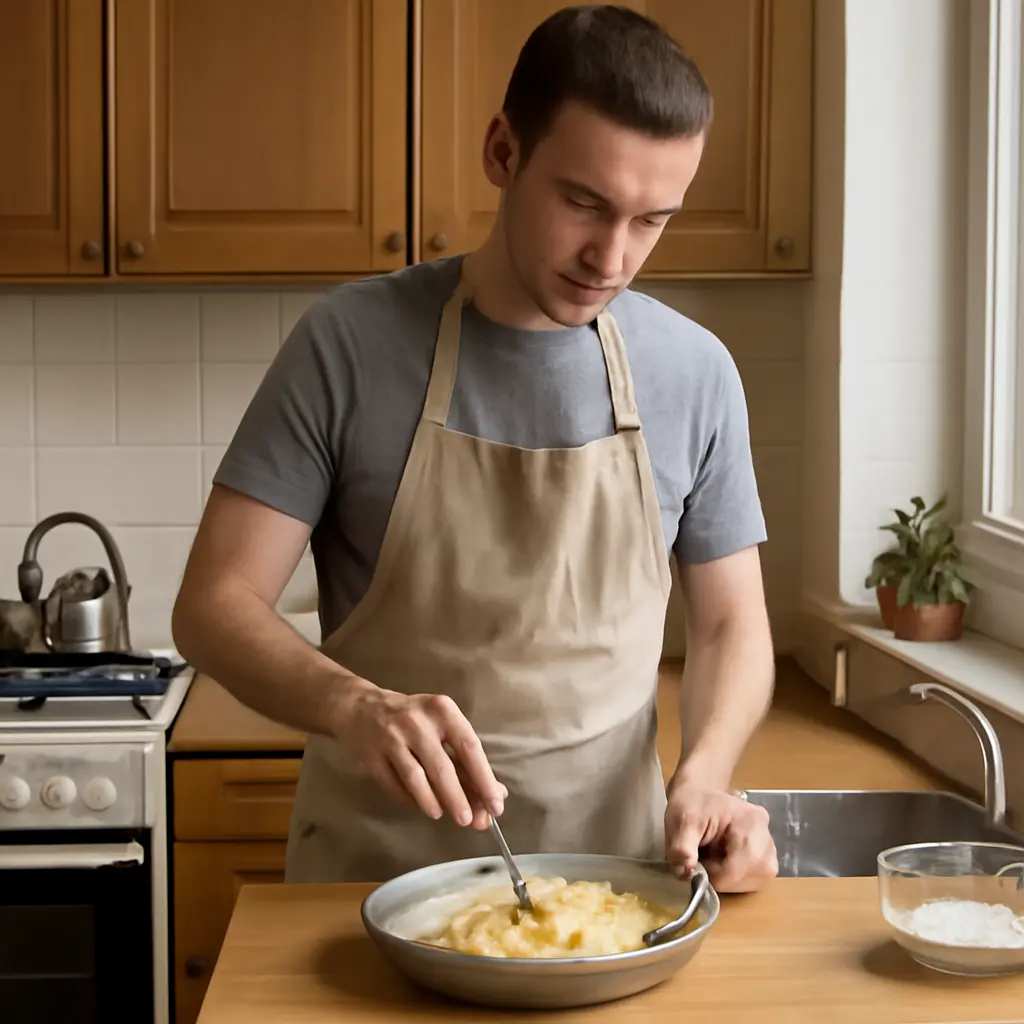
Professional gelato technique is less about owning a machine than controlling temperature, air, sugar, fat, and ice crystals. Gelato is an Italian-style frozen dessert whose texture depends on a carefully balanced mix and steady freezing; at home, you can approximate that control with a saucepan, whisk, shallow metal pan, freezer, and patient hand-stirring. The key methods are to build a balanced custard or starch-thickened base, chill it thoroughly, freeze it in a thin layer while breaking up ice crystals, and serve it at a temperature that allows its flavor and softness to show. These techniques reflect established food-science principles: the Institute of Food Technologists explains that freezing rate and ice-crystal size strongly affect frozen-dessert texture, while the USDA recommends keeping home freezers at 0°F (−18°C) or below for food safety.
Hand-Churned Gelato Texture Depends on Controlled Ice Formation
Gelato texture is the sensory result of its ice crystals, air cells, fat droplets, and concentrated flavor. There is no single universal legal definition of gelato that applies across every country; in culinary practice, the term usually describes Italian-style frozen dessert served relatively soft, often with less incorporated air than conventional ice cream. The University of Guelph’s food-science resources describe frozen-dessert structure as a combination of ice crystals, air cells, fat, and an unfrozen serum phase. When ice crystals grow too large, the dessert feels coarse or icy; when the mix is balanced and frozen quickly, it is smoother.
Without a churn, the practical objective is to imitate what a machine does: freeze the mix while repeatedly moving it so that crystals remain small. Related styles include custard-based gelato, which uses egg yolk for richness and emulsification; milk-and-starch gelato, which thickens without eggs; and fruit sorbetto, which relies on fruit, water, and sugar rather than dairy. Each benefits from close attention to sweetness, solids, and freezing technique.
Ice-crystal size and freezing speed
Ice-crystal control means limiting the time water has to form and enlarge crystals. A home freezer cannot freeze a liquid as rapidly as a commercial batch freezer, so spread the mix in a shallow metal pan, which transfers cold more effectively than a deep plastic container. Stir and scrape the partly frozen edges into the softer center every 30 minutes. This repeated movement breaks up developing crystals and distributes the colder portions through the mix.
Use a pan that gives the mix a thin layer, ideally around 2–3 centimeters deep, and pre-chill it if convenient. The exact freezing time depends on the freezer, pan, and recipe, so judge by texture rather than a fixed clock. The Institute of Food Technologists’ explanations of frozen-food structure support the underlying principle: faster freezing generally produces smaller ice crystals, while temperature fluctuations can encourage crystals to grow.
Air incorporation and the gelato-versus-ice-cream distinction
Overrun is the increase in volume caused by incorporating air during churning. Gelato is commonly made with less overrun than many mass-market ice creams, giving it a denser impression, although actual formulations vary by producer and region. At home, hand-stirring naturally incorporates less air than a fast-running machine. Whisk the base thoroughly before chilling to combine ingredients, but avoid whipping it into a foamy mixture; during freezing, fold and scrape rather than beat continuously.
This lower-air approach makes ingredient balance particularly noticeable. A dense mix can taste rich, but too much fat or too few dissolved solids may make it hard and dull when frozen. The goal is not simply to make the dessert as dense as possible; it is to create a smooth, scoopable texture with clear flavor.
A Balanced Gelato Base Controls Sweetness, Body, and Scoopability
A gelato base is the liquid mixture of dairy or fruit, sweeteners, and flavorings that becomes the frozen dessert. In professional formulation, the ingredients are balanced because sugar affects both sweetness and freezing point, while milk solids and stabilizing ingredients add body and manage water. The University of Guelph’s food-science teaching materials explain that dissolved sugars lower the freezing point of water. This is why simply reducing sugar can produce a harder, icier result, not just a less-sweet one.
For a no-equipment version, use a tested recipe rather than improvising large ingredient changes. A saucepan, thermometer, fine sieve, and whisk are enough to cook and prepare a reliable base. A practical starting point is a milk-forward recipe with moderate cream, measured sugar, and either egg yolk or a small amount of starch for structure.
Milk, cream, and milk solids
Milk provides water, protein, lactose, and minerals; cream contributes fat and a smoother, richer mouthfeel. Gelato is often formulated with less fat than rich American-style ice cream, but recipes vary considerably. Too much cream can mute delicate flavors and feel heavy, while too little total solids can leave a thin, icy dessert. For a first batch, follow a reputable recipe’s proportions and use full-fat dairy consistently rather than substituting products with different fat levels without adjustment.
Milk powder can increase milk solids without adding much water, improving body in some recipes. It is optional, not a requirement. If using it, whisk it thoroughly into the cold ingredients to prevent lumps, then heat the mixture according to the recipe.
Sugar and freezing-point control
Sugar provides sweetness and keeps part of the water from freezing at ordinary freezer temperatures. Sucrose is the standard home-kitchen choice; glucose syrup or invert sugar may be used in some professional formulas because different sugars influence sweetness and freezing behavior differently. Do not replace one sweetener gram-for-gram without a tested conversion: the dessert may turn too soft, too hard, or excessively sweet.
A useful home test is to taste the base before freezing. It should taste slightly sweeter than the desired finished dessert because cold suppresses the perception of sweetness. This is a practical sensory check, not a substitute for accurate measurements. Record the recipe and results so the next batch can be adjusted in small increments.
Egg yolk or starch for body
Egg yolk emulsifies fat and thickens a custard base when gently heated. For a custard method, warm the dairy, whisk some of it into the yolks to temper them, then return the mixture to the pan and cook gently while stirring. The USDA advises cooking egg-containing dishes to a safe temperature; for home custards, use a food thermometer and follow current USDA guidance for egg dishes, taking care not to overheat and scramble the yolks.
A starch-thickened base is an alternative for cooks avoiding eggs. Cornstarch gelatinizes when heated in liquid, adding body and reducing the watery impression. Mix the starch with a little cold milk first, then whisk it into the warm base and cook until thickened. Starch and egg are different approaches, not ingredients that must always be combined; select a recipe designed for the method you want.
Hand-Freezing Gelato Requires a Repeatable Kitchen Workflow
A repeatable workflow replaces the temperature and agitation control of a machine. The essential sequence is to dissolve and cook the ingredients, cool the base quickly, mature it in the refrigerator, freeze it shallowly, and stir it at intervals. Food safety matters throughout: the USDA recommends a refrigerator temperature of 40°F (4°C) or below and a freezer at 0°F (−18°C) or below. Keep dairy mixtures cold, avoid leaving them at room temperature for extended periods, and use clean utensils.
Cook and chill the base safely
Heating dissolves ingredients and, in custard recipes, thickens the yolks; it also reduces some microbial risks when done correctly. After cooking, strain the mixture if needed and cool it promptly. Set the saucepan in an ice-water bath and stir with a clean utensil, then cover and refrigerate. The FDA’s food-safety guidance emphasizes prompt chilling of perishable foods; do not leave a warm dairy base on the counter until it reaches room temperature.
Chill the base until thoroughly cold before freezing. A cold starting mixture gives the home freezer less work and helps the dessert freeze more evenly. If possible, refrigerate it for several hours or overnight. This resting period also lets flavors blend and any stabilizing ingredients hydrate.
Freeze in a shallow pan and stir on schedule
Pour the cold base into a shallow metal pan and place it on a level freezer shelf. After roughly 30 minutes, inspect the edges: when they begin to freeze, scrape them into the softer center with a sturdy fork or whisk. Repeat every 20–30 minutes, scraping the sides and bottom, until the mixture is thick, evenly frozen, and resembles soft-serve. Depending on the freezer and recipe, this can take several hours.
For an example, a home cook making a vanilla base can chill the cooked mixture overnight, freeze it in a pre-chilled metal pan, and stir it several times during the first few hours. If the finished gelato remains too firm after storage, let it stand briefly in the refrigerator or at room temperature before serving rather than microwaving it, which can melt it unevenly.
Pack, harden, and store with minimal temperature swings
Once the hand-frozen gelato reaches a uniform soft-set texture, transfer it to a clean, shallow, freezer-safe container. Press parchment or food-safe film against the surface and cover tightly to limit air exposure and moisture loss. Harden it in the coldest stable part of the freezer. Frequent thawing and refreezing can damage texture by allowing crystals to grow, so serve only what you need and return the rest promptly.
For best quality, make a modest batch and eat it soon. Home freezers fluctuate more than commercial storage systems, and hand-churned gelato lacks some of the stabilizing controls used in professional production. Discard any dessert that has been held under unsafe conditions or shows signs of contamination; freezing does not make improperly handled food safe.
Flavor and Serving Techniques Complete Equipment-Free Gelato
Flavor technique matters because cold reduces aroma release and perceived sweetness. Professional practice often emphasizes high-quality ingredients, careful infusion, and a serving temperature that allows the dessert to soften. A gelato kept at a very low freezer temperature may be difficult to scoop and taste muted; tempering it briefly before serving improves texture and aroma.
Infuse flavor without adding excess water
Infusion means steeping an ingredient in warm dairy or syrup to extract aroma. Vanilla bean, citrus peel, coffee, tea, and toasted spices can be infused into warm milk, then strained before the base is chilled. Avoid adding large quantities of watery flavorings after the base is balanced, because extra water can make the frozen dessert icier. For fruit flavors, use a recipe formulated for fruit purée or cook down the purée to concentrate it before adding it.
For a chocolate version, whisk cocoa into the warm dairy so it disperses evenly; melted chocolate contributes both cocoa solids and fat, so use a recipe that accounts for it. Add delicate extracts after cooking when appropriate, because prolonged heat can diminish their aroma.
Use fruit sorbetto as a separate formulation
Sorbetto is a dairy-free frozen dessert based on fruit, water, and sugar. It is not simply gelato with milk omitted: fruit contributes water, fiber, acids, and natural sugars, all of which affect freezing and texture. Choose ripe, flavorful fruit, blend it smoothly, and follow a tested sorbet recipe that balances purée and sweetener. A small amount of lemon juice can brighten some fruits, but too much acidity can overpower the flavor.
As with dairy gelato, freeze the mixture in a shallow pan and stir regularly. If a sorbet freezes very hard, the likely causes include insufficient dissolved sugar, a high water content, or prolonged storage—not necessarily a lack of stirring alone.
Temper and serve for the intended texture
Tempering is the short, controlled softening of frozen dessert before service. Allow the container to stand briefly in the refrigerator or on the counter until it yields to a scoop, checking frequently. The ideal time varies with portion size, freezer temperature, and recipe. Serve in pre-chilled bowls if desired, and avoid leaving the whole container out while guests eat.
A simple sensory check can guide adjustments: a smooth, dense scoop with a clean flavor suggests good balance; coarse crystals point toward slow freezing or temperature fluctuation; a rock-hard result may indicate too little sugar or solids; and a greasy mouthfeel can signal excessive fat or poor emulsification. These observations help refine the next batch without specialized equipment.
Conclusion: Professional Gelato Technique Starts with Process, Not Machinery
Equipment-free gelato depends on managing the same fundamentals used in professional production: small ice crystals, restrained air incorporation, balanced sugar and dairy solids, safe chilling, and careful serving. A shallow metal pan and repeated hand-stirring approximate the action of a churn; a well-measured custard or starch base supplies structure; and sound storage preserves the texture you have created. Begin with a tested recipe, change one variable at a time, and keep notes on flavor, softness, and freezing time. For further learning, consult food-safety guidance from the USDA and FDA alongside food-science resources from the Institute of Food Technologists and the University of Guelph.
Sources: U.S. Department of Agriculture, Food Safety and Inspection Service, “Refrigeration and Food Safety,” https://www.fsis.usda.gov/food-safety/safe-food-handling-and-preparation/food-safety-basics/refrigeration; U.S. Department of Agriculture, Food Safety and Inspection Service, “Egg Products and Food Safety,” https://www.fsis.usda.gov/food-safety/safe-food-handling-and-preparation/eggs/egg-products-and-food-safety; U.S. Food and Drug Administration, “Food Safety at Home,” https://www.fda.gov/consumers/consumer-updates/food-safety-home; Institute of Food Technologists, Food Science for the Consumer, https://www.ift.org/; University of Guelph, Food Science, https://foodscience.ca/