
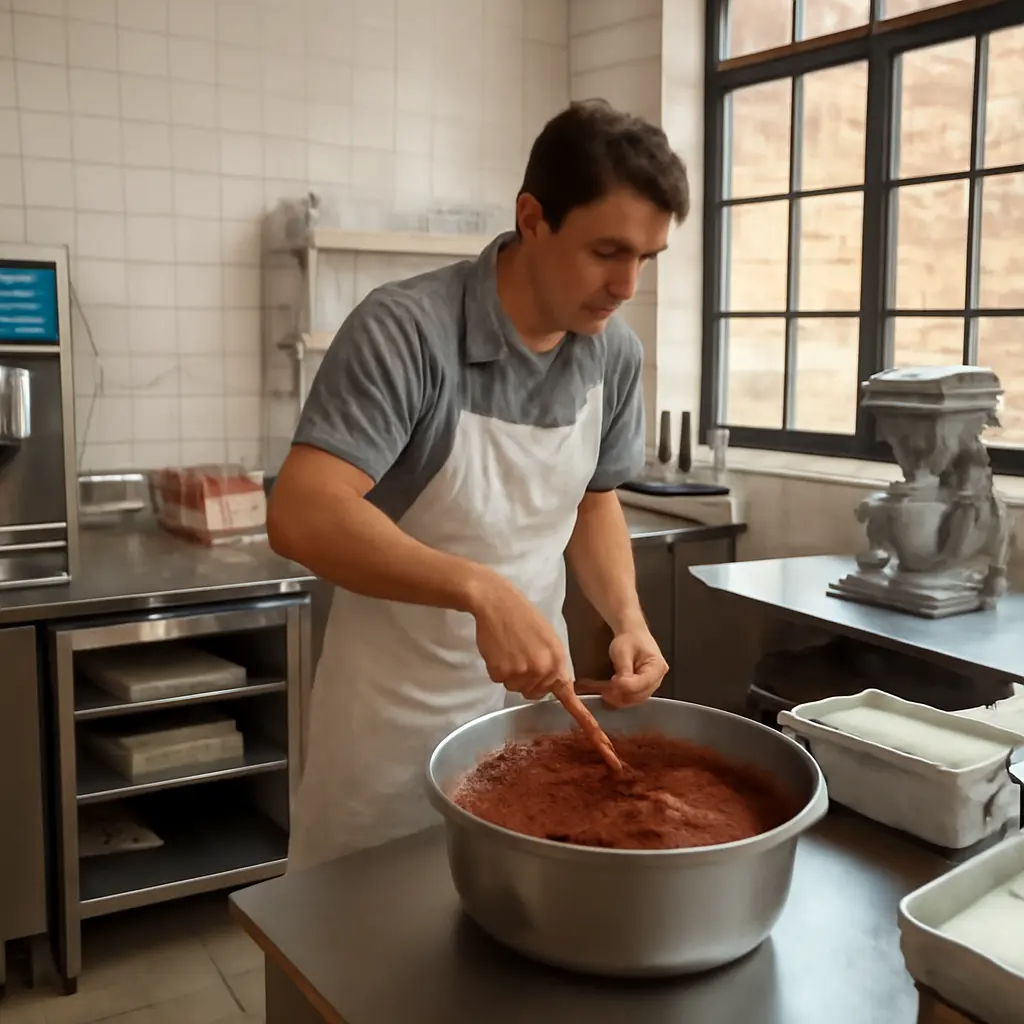
Italian gelato masters value cocoa-based formulas because cocoa contributes more than chocolate flavor: it brings fat, dry solids, color, and bitterness that affect a gelato’s body and balance. A well-designed recipe accounts for those effects rather than simply adding cocoa to a standard base. That matters in a market where chocolate is a familiar favorite, but craft depends on texture as much as taste. Understanding cocoa’s role in solids and fat, choosing between cocoa powder and chocolate, and balancing sweetness and freezing point helps explain why Italian makers treat chocolate gelato as its own formulation challenge.
Cocoa-based formulas shape Italian gelato texture and flavor
“Cocoa-based formula” is a practical recipe-design term, not a single legally defined Italian gelato category. It describes a mix in which cocoa powder—sometimes paired with chocolate—is deliberately calculated as part of the total solids, fat, sugar, and water balance. The distinction is important: cocoa powder supplies cocoa solids and some cocoa butter, while chocolate adds a larger and more variable amount of cocoa butter and often sugar. Treating them as interchangeable can produce gelato that is too firm, too sweet, too fatty, or too dry.
The International Dairy Foods Association describes frozen desserts as systems whose texture depends on ingredients and processing, including the management of ice crystals and air. In gelato, a cocoa ingredient changes that system by adding particles and fat while influencing how the mix freezes. Italian gelato professionals therefore use cocoa formulas to control flavor intensity and structure together—not simply to make a darker product.
Cocoa powder: concentrated flavor and dry solids
Cocoa powder is the dry material left after much of the cocoa butter has been pressed from cocoa liquor and the remaining cake is milled. It contributes cocoa flavor, color, and nonfat cocoa solids, along with residual fat. Because it contains little water, it can increase a mix’s total solids and bind some water, helping create a fuller impression on the palate. Too much, however, may make the finished gelato feel powdery, dense, or overly bitter.
The U.S. Department of Agriculture’s FoodData Central lists unsweetened cocoa powder as a concentrated source of solids, including dietary fiber and minerals; its exact nutrition varies by product and processing. For a gelato maker, the useful formulation lesson is not that cocoa is a universal thickener, but that its composition must be included in the recipe’s solids and fat calculations. Natural and alkalized cocoa can also differ in acidity, color, and flavor, so a substitution may change more than appearance.
Chocolate: cocoa butter changes the balance
Chocolate contains cocoa solids and cocoa butter, and many products also contain sugar, emulsifiers, or milk ingredients. Adding it to a dairy base introduces fat and, depending on the chocolate, sweetness. Cocoa butter firms as it cools, so a formula designed for cocoa powder alone may become harder or waxier when chocolate is added without adjusting other ingredients.
The European Union’s cocoa and chocolate marketing rules distinguish products by composition, including minimum cocoa-solid and cocoa-butter requirements for defined chocolate categories. Those standards help explain why “dark chocolate” is not one fixed ingredient for recipe development: two chocolates can have different cocoa percentages, sugar levels, and fat content. Gelato masters read the product specification and formulate accordingly, rather than relying on the front-of-pack percentage alone.
Cocoa-based formulas balance solids, sweetness, and freezing
The main technical reason specialists calculate cocoa deliberately is that gelato is a frozen mixture, not just a flavored custard. Its serving texture depends on the water that freezes, the concentration of dissolved sugars, the quantity and type of fat, and the total solids. Cocoa affects several of these at once. The following formulation choices show how makers translate that chemistry into a smooth, scoopable product.
Total solids and water management
Total solids are the ingredients remaining when water is excluded: sugars, milk solids, fat, cocoa particles, and other dry components. Raising solids can reduce the proportion of free water and contribute body, but excessive solids can make gelato heavy or pasty. Cocoa powder’s dry particles therefore need to be balanced against the mix’s dairy solids and sugars, rather than added as an isolated flavor boost.
The International Gelato Association and professional gelato-training materials commonly teach formulation through ingredient balance—especially sugars, fat, and solids—rather than through a single universal recipe. Targets vary with the style, serving temperature, and equipment. A milk-based chocolate gelato and a water-based chocolate sorbetto, for example, require different calculations because their sources of fat and solids differ.
Sugar and freezing-point control
Sugars sweeten the mix but also lower its freezing point, helping determine how much water remains unfrozen at serving temperature. This is why reducing sugar to make a cocoa flavor taste less sweet can unintentionally create a harder product. Conversely, adding sweetened chocolate without reducing other sugars may make gelato overly sweet and too soft.
Professional recipes often consider the relative freezing effects of different sugars, not merely their combined weight. Sucrose, dextrose, and glucose syrups do not behave identically. Cocoa’s bitterness can make sweetness seem lower than it is, so tasting alone may not reveal whether the recipe’s freezing balance is correct. A reliable maker checks ingredient specifications and tests the finished texture at the intended display temperature.
Fat, emulsification, and mouthfeel
Fat carries aroma and gives chocolate gelato a rounded mouthfeel, but too much can coat the palate or interfere with a clean finish. Cocoa powder, chocolate, cream, and milk each contribute different amounts and types of fat. The formula must account for their combined effect, while mixing and aging help distribute ingredients and support a stable texture.
The Codex Alimentarius standard for cocoa powders and cocoa–sugar mixtures sets composition requirements for products sold under those descriptions, underscoring that cocoa ingredients are not compositionally identical. In practice, gelato makers may adjust the dairy fat or choose a different chocolate when a batch tastes greasy, dull, or slow to melt. These are recipe and process decisions, not proof that one cocoa percentage is always superior.
Cocoa selection gives Italian gelato distinct flavor profiles
Once the formula is balanced, cocoa origin and processing shape the sensory result. Italian gelato shops may offer several chocolate flavors because “chocolate” can mean a mild milk-chocolate profile, a deep bitter cocoa, or a more aromatic single-origin style. Each requires a different relationship between cocoa, dairy, and sugar.
Natural and alkalized cocoa
Natural cocoa is generally more acidic and often presents sharper, fruitier notes; alkalized, or Dutch-process, cocoa has been treated to reduce acidity and commonly produces a darker color and rounder taste. These descriptions are broad: bean variety, roasting, and manufacturer all matter. A maker choosing between them considers the desired flavor and color, then verifies how the powder performs in the dairy base.
The International Cocoa Organization notes that cocoa flavor develops through fermentation, drying, and roasting, with origin and processing contributing to differences in aroma. That makes ingredient sourcing relevant to gelato identity. A darker powder may look more intense without necessarily tasting more complex, so color should not be used as a substitute for tasting and recipe trials.
Cocoa percentage and origin-led chocolate
A chocolate’s cocoa percentage indicates the proportion of cocoa-derived ingredients, not a direct measurement of bitterness, quality, or cocoa butter alone. A higher percentage often means less room for sugar, but its flavor still depends on the beans, processing, and the proportions of cocoa solids and butter. In gelato, the percentage is a starting clue—not a complete formulation specification.
Origin-led chocolate can provide recognizable notes such as fruit, spice, or roasted nuts, but dairy and cold serving temperatures can soften or mute those aromas. Gelato masters may choose a chocolate whose flavor remains distinct after freezing, then adjust the recipe to avoid masking it with excess sugar or cream. This is one reason tasting the mix both before and after freezing is useful.
Milk chocolate, dark chocolate, and cocoa sorbetto
Milk-chocolate gelato generally combines cocoa with milk ingredients and added sweetness, producing a softer, gentler profile. Dark-chocolate gelato usually emphasizes cocoa intensity and bitterness, often requiring closer attention to sugar balance. Cocoa sorbetto removes dairy fat from the equation, but it still needs a carefully balanced mix of water, sugars, and cocoa solids to avoid an icy or chalky result.
These are related but distinct product types, or hyponyms, within cocoa-flavored frozen desserts. A recipe that succeeds as a dairy gelato cannot automatically be converted into sorbetto by replacing milk with water: the missing milk solids and fat alter both body and flavor release. The maker must rebuild the solids and freezing balance for the new style.
Italian gelato practice turns cocoa theory into a repeatable result
Cocoa formulas are valuable because small ingredient changes can have visible effects in the display case and on the spoon. Professional production combines weighing, temperature control, ingredient knowledge, and tasting. The same principles apply whether a shop makes a classic chocolate flavor or a limited batch highlighting a particular cocoa.
A practical formulation workflow
A disciplined workflow begins with the specifications for the cocoa or chocolate, including fat and sugar where available. The maker then calculates the contribution of all ingredients, prepares and mixes the base, and evaluates it after chilling and freezing. Adjustments are made in measured increments so the effect of each change can be identified.
- Weigh cocoa powder and chocolate separately; do not treat their quantities as equivalent.
- Account for cocoa butter, added sugar, dairy fat, and dry cocoa solids in the full recipe.
- Check sweetness and freezing behavior at the intended serving temperature, not only at room temperature.
- Record the cocoa brand, batch, process, and recipe changes so results can be reproduced.
This approach is especially useful when a supplier changes a product specification or a shop switches between natural and alkalized cocoa. Keeping a recipe log turns subjective feedback—such as “too bitter” or “too firm”—into a basis for controlled improvement.
Texture checks and common formulation faults
A well-made cocoa gelato should show an even color, a smooth rather than gritty texture, and a flavor that remains clear after freezing. Graininess can point to poorly dispersed powder or unsuitable mixing; a dry, powdery finish may indicate excessive cocoa solids; excessive hardness can reflect an imbalance in sugars, water, or total solids. A greasy sensation may signal too much fat or poor fat balance.
These signs are diagnostic clues, not automatic diagnoses: freezing equipment, storage temperature, and service practices can also affect texture. The International Dairy Foods Association’s technical guidance on frozen desserts likewise treats product quality as a result of both formulation and processing. For a fair comparison, batches should be made and stored under consistent conditions.
Conclusion: cocoa precision defines better chocolate gelato
Italian gelato masters favor carefully designed cocoa-based formulas because cocoa influences flavor, solids, fat, sweetness, and freezing behavior at the same time. Cocoa powder and chocolate are not interchangeable; cocoa selection, total-solids management, sugar balance, and serving temperature all affect the final texture. Distinct styles—from milk-chocolate gelato to dark chocolate and cocoa sorbetto—need their own formulation logic.
The broader lesson is that craft comes from understanding ingredients rather than relying on a single “authentic” recipe. Readers and aspiring makers can learn more by comparing cocoa specifications, testing small batches, and consulting professional gelato and food-science resources. Record each trial, taste at serving temperature, and let the complete formula—not color or cocoa percentage alone—guide the next adjustment.
Sources: International Dairy Foods Association, Frozen Desserts and Ice Cream Science resources, https://www.idfa.org/; U.S. Department of Agriculture, FoodData Central, Cocoa, dry powder, unsweetened, https://fdc.nal.usda.gov/; European Parliament and Council, Directive 2000/36/EC relating to cocoa and chocolate products intended for human consumption, https://eur-lex.europa.eu/eli/dir/2000/36/oj; Codex Alimentarius Commission, Standard for Cocoa Powders (Cocoas) and Dry Mixtures of Cocoa and Sugars, CXS 105-1981, https://www.fao.org/fao-who-codexalimentarius/; International Cocoa Organization, Cocoa Processing and Chocolate Production resources, https://www.icco.org/; International Gelato Association, Gelato production and training resources, https://www.gelatoassociation.org/.